Published by Pensions Ireland · · Updated · Editorial standards
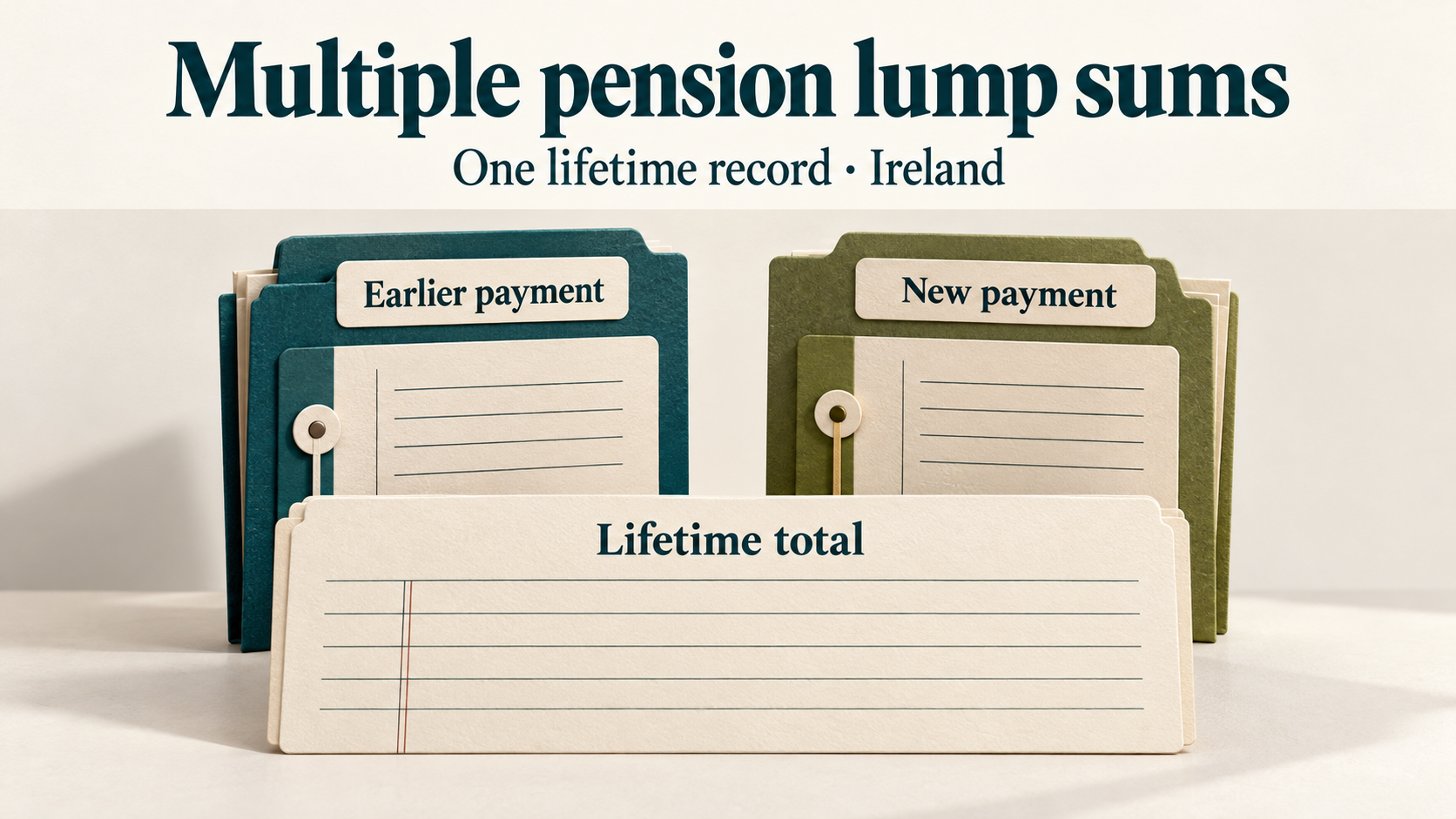
Having more than one pension does not give you a separate €200,000 tax-free lump-sum limit for each plan. In Ireland, the ordinary retirement lump-sum tax calculation uses a lifetime record of relevant payments. Before taking money from another pension, establish what you have already received and give the administrator a complete payment history.
This guide is for people reviewing multiple pension lump sums in Ireland. Checked on 15 October 2026, it explains the lifetime tax bands, how earlier payments affect a later lump sum, and the distinction between a scheme benefit and its tax treatment. It does not confirm access to a pension or calculate an individual tax liability.
Why a lifetime limit changes the way you compare pensions
Each provider can describe the benefits held in its own arrangement, but that statement is only one part of your retirement picture. The tax-free amount is attached to your lifetime payment history rather than to the number of accounts you hold. A new provider, a later retirement date or a new tax year does not make an earlier relevant payment disappear from that history.
This is why a statement showing a possible lump sum should not be read as a promise that the whole amount will be tax free. There are two stages: establish the benefit available under the scheme, then apply the tax treatment using the complete record. The first stage can differ between arrangements even though the lifetime tax record must still be considered.
The tax applies to the part in each band
Crossing the ordinary tax-free limit does not mean the entire next payment is taxed at one rate. In the worked example below, the remaining tax-free amount covers the first part of the new payment. Only the part extending beyond that remaining amount enters the next band. Reading the bands as slices explains the calculation more clearly than comparing the new payment with the headline limit on its own.
Equally, the tax-free lifetime limit and the amount you can withdraw are different concepts. A person may have unused tax-free capacity but no right to take that amount from a particular arrangement. Conversely, an arrangement may permit a payment that is partly taxable because earlier relevant payments have already used some of the lifetime amount.
One lifetime limit, even with different providers
The ordinary tax-free limit is €200,000 in total, rather than €200,000 per provider, pension or tax year. Relevant retirement lump sums received on or after 7 December 2005 count towards it. Changing provider does not create a new lifetime allowance.
The tax record can therefore matter even when an earlier pension has been closed or you no longer receive statements from its provider. Find the payment evidence instead of assuming that an old plan no longer counts. The old-pension records guide can help you identify former scheme contacts.
The amount available and the tax-free amount are different
First ask what lump sum your arrangement permits under the relevant retirement option. Then ask how much of that payment falls within the remaining lifetime tax-free amount. A scheme illustration or a fund percentage alone does not answer both questions.
For example, occupational pension lump-sum benefits can be linked to service and remuneration. Do not apply a 25% fund illustration automatically to every workplace pension. The workplace pension guide explains why the scheme type should be identified first.
How the ordinary tax bands work
| Cumulative relevant lump sums | Ordinary Income Tax treatment |
|---|---|
| First €200,000 | Lifetime tax-free amount. |
| Amount above €200,000 up to €500,000 | 20% Income Tax. |
| Amount above €500,000 | Taxed through PAYE at the applicable marginal rate. Further payroll deductions, including USC, need checking. |
This table summarises ordinary treatment, not every exception. The lifetime bands concern lump-sum tax; they are not the same as the Standard Fund Threshold. Ask for the complete calculation if a special rule or a separate pension tax charge may apply.
A worked example: an earlier payment changes the next one
Assume a person has received €150,000 of relevant retirement lump sums since the specified date and has no other earlier payments. A different pension now permits a €90,000 retirement lump sum. Assume ordinary Irish treatment, no special exemption and no separate tax charge. This is a hypothetical example, not a suggestion about how much to take.
| Step | Illustration |
|---|---|
| Lifetime tax-free amount already used | €150,000. |
| Tax-free amount remaining | €200,000 − €150,000 = €50,000. |
| New retirement lump sum | €90,000. |
| Part of new payment above the remaining tax-free amount | €90,000 − €50,000 = €40,000. |
| Illustrated Income Tax on that part | €40,000 × 20% = €8,000. |
| New payment after that illustrated tax | €90,000 − €8,000 = €82,000. |
The combined relevant payments are €240,000, so the example does not reach the band above €500,000. It shows why the administrator needs the earlier payment record: looking at the new €90,000 on its own would give the wrong starting point.
Make a useful payment history
Create one line per payment. Record the scheme or provider, reference, payment date, gross retirement lump sum, tax deducted and document supporting the figures. Keep a proposed amount labelled as proposed; do not mix it with money already received.
Ask for a breakdown if a bank receipt includes more than one type of payment. A net amount arriving in your account is not a substitute for the gross lump-sum and tax record. Keep your worksheet beside the original letters rather than replacing those letters with an estimate.
Questions to resolve before the next payment
- Have you identified every relevant earlier retirement lump sum?
- Are dates and gross amounts supported by documents?
- Does the administrator have the information needed for the proposed payment?
- Have the scheme entitlement and tax treatment been explained separately?
- Are any foreign benefits, pension adjustment orders or unusual payments involved?
- Have you considered the retirement income remaining after taking cash?
Foreign pensions, special lump sums and pension adjustment orders need specific checks. Do not extend this simplified example to them automatically. Our PAO document checklist explains how to organise separation-related questions. Wider retirement planning should look beyond the cash payment alone.
Frequently asked questions
Do two pension providers give me two tax-free limits?
No. The ordinary €200,000 limit is a lifetime total across relevant retirement lump sums, not a separate allowance per provider.
Does the lifetime amount reset each tax year?
No. Keep the relevant earlier payment history when reviewing a later lump sum, even if it is paid in a different year.
Should I enter the amount received into my bank account?
Use the documented gross retirement lump sum and keep tax deducted separately. Ask the administrator to clarify a payment breakdown if you only have a net bank receipt.
Does the calculator confirm how much my scheme will pay?
No. It illustrates the entered fund-based assumptions and earlier lump sums. Your administrator must confirm the available scheme benefit and applicable tax treatment.
General information for Ireland. Illustrations are not personal advice, confirmation of entitlement or a complete tax assessment.