Published by Pensions Ireland · · Updated · Editorial standards
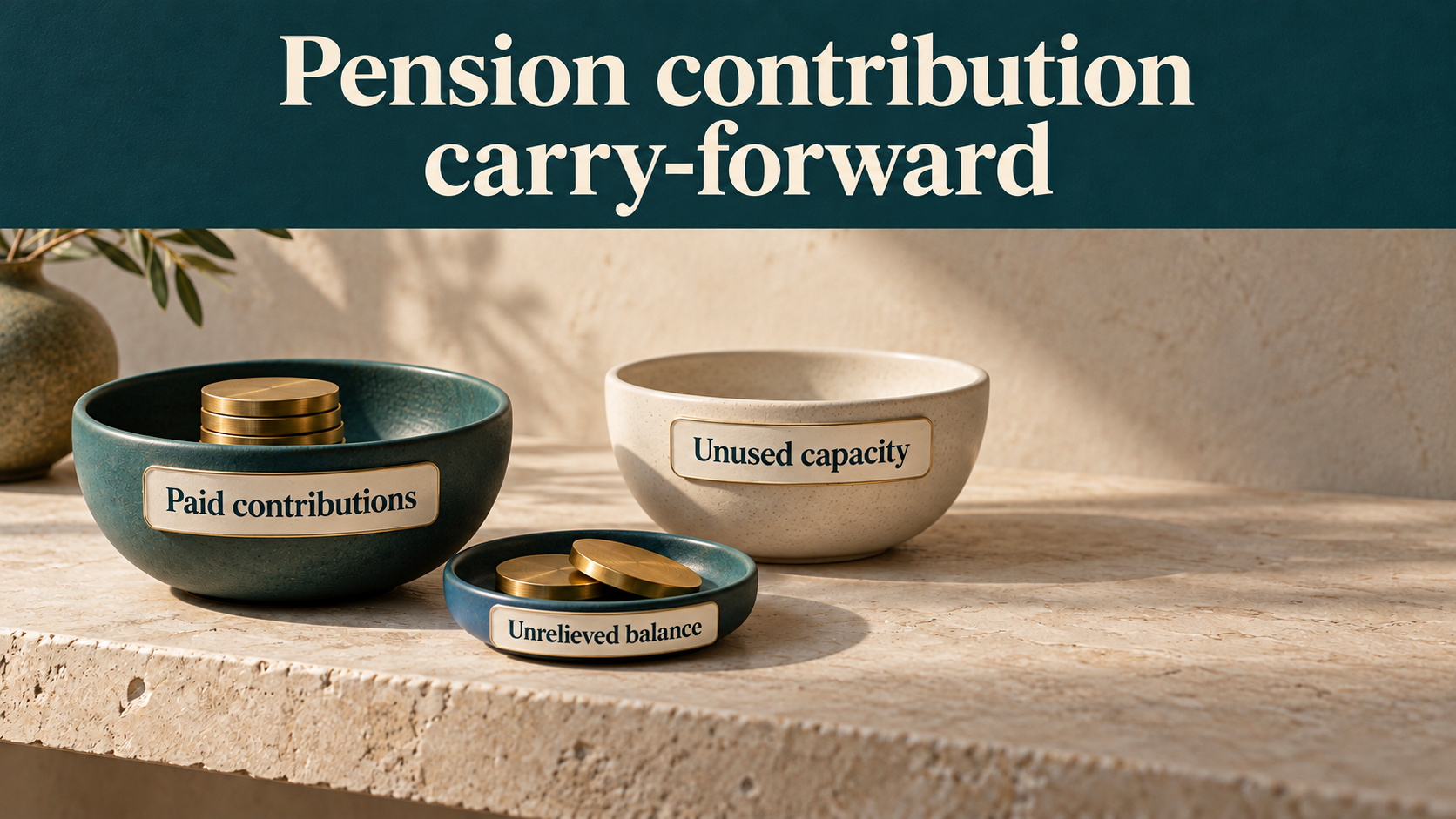
Pension contribution carry-forward in Ireland concerns money you have already paid into a qualifying pension but have not been able to claim full tax relief on. It is different from leaving part of an annual contribution limit unused. Before planning another payment, separate the amount paid, the relief already granted and any balance that may qualify in a later year.
This guide is for people reviewing personal PRSA or Retirement Annuity Contract contributions. Checked on 13 October 2026, it explains the main distinctions and how to organise the records for a review. It does not assess an individual tax return, employer funding or every occupational scheme rule.
Four situations that are easily confused
| Situation | What it means | Starting record |
|---|---|---|
| Paid, but not fully relieved | An actual contribution exists. Establish the unrelieved balance and whether it can be relieved later. | Receipt and relief calculation. |
| Annual capacity left unused | You did not pay that amount. It is not an unrelieved contribution waiting to be carried forward. | Amount actually paid, rather than an old calculator ceiling. |
| Relief not claimed on a payment | Check the claim for the appropriate year before assuming the money belongs in a later year. | Tax return, payroll treatment and receipt. |
| A later payment elected for the previous year | This is a separate payment-and-election process with timing conditions. | Payment date and evidence of the election. |
Label your question using one of these descriptions. “Unused relief” can mean several different things, which makes it difficult to give a reliable answer without seeing the payment history.
A worked example: a paid contribution with an unrelieved balance
Assume one qualifying personal PRSA, ordinary age-related limits, no other pensions or special adjustments, and confirmed net relevant earnings. In 2025 the person is aged 45, has €40,000 of those earnings and pays €12,000. No part of this payment is elected for an earlier year.
| 2025 record | Illustration |
|---|---|
| Earnings used for the calculation | €40,000 |
| Ordinary age-related percentage | 25% |
| Contribution ceiling for relief | €40,000 × 25% = €10,000 |
| Contribution actually paid | €12,000 |
| Illustrated amount not relieved in 2025 | €12,000 − €10,000 = €2,000 |
Now assume the person remains within the same age band in 2026, has €50,000 of confirmed net relevant earnings and pays a further €6,000. The ordinary contribution ceiling is €50,000 × 25% = €12,500. The €6,000 current payment and €2,000 carried amount total €8,000, below that ceiling. The illustration shows room within the percentage limit; it does not confirm an individual’s claim or calculate a tax refund.
What if the contribution limit was not used?
Change the first example so that only €6,000 was paid in 2025 against the illustrated €10,000 ceiling. The difference is €4,000 of unused capacity, not €4,000 of paid contributions without relief. Those two records should not be treated as interchangeable. Recalculate the relevant position for the later year instead of adding the old unused ceiling to it.
Do not import an allowance rule from another country’s pension system into an Irish calculation. If an answer says you can “bank the last few years”, ask precisely which paid contributions, tax years and Irish rules it refers to.
Can you claim for an earlier year instead?
A qualifying payment made after a year ends can, under the applicable conditions, be elected for the immediately previous year. That process is separate from carrying an unrelieved contribution forward. Payment and election timing both need to be checked. Our 2026 pension tax relief deadline guide explains the current timetable without treating every payment as eligible.
If the contribution was paid in the relevant year and relief was simply not claimed, examine that year’s claim route. PAYE and self-assessment customers use different processes, and payroll may already have provided relief. Do not claim the same amount again without reconciling the records.
What to confirm before relying on a carried amount
- The pension type and the contribution’s qualifying status.
- The original payment date, amount and policy reference.
- The tax year in which any part was relieved, including relief through payroll.
- The earnings source and relief capacity in the year now being considered.
- Other personal contributions, including relevant workplace payments.
- Any change in employment, retirement status or income that affects the calculation.
The overall earnings cap is €115,000 for these personal-relief calculations, not a separate cap for every policy. A carried amount needs to be considered alongside the later year’s other contributions. The pension contribution calculator and guide can illustrate current inputs, but it does not verify a carried balance from your tax history.
Make a record that can be checked
Use a separate line for each payment. Add columns for the payment date, pension, tax year claimed, amount already relieved and balance under review. Keep a question mark beside anything not yet confirmed. This gives your accountant or advisor a usable starting point and helps avoid counting the same receipt twice.
Attach the contribution certificates or detailed receipts and the relevant payroll or tax-return records. For a meeting preparation list, use the general pension review checklist. If your earnings vary, the self-employed pension guide covers cash-flow preparation before another payment.
Frequently asked questions
Can unused personal PRSA contributions be carried forward?
An amount actually paid but not fully relieved may be carried forward under the applicable rules. Confirm the balance, later-year earnings and available relief before relying on it.
Is unused contribution capacity the same as an unrelieved payment?
No. Capacity you did not use is not money already paid into a pension. Keep the annual ceiling separate from contribution receipts.
Does carrying forward an amount guarantee a tax refund?
No. The contribution must qualify and the later year’s earnings, limits and tax position must support the relief. This guide does not establish an individual’s refund.
Should I include relief already given through payroll?
Yes. Reconcile payroll and return records before calculating an outstanding amount, so the same payment is not claimed twice.
General information only. This guide does not determine pension suitability, establish claim eligibility or calculate personal tax liability.